Tuesday, August 23, 2011

New Typography and Illustration Treasures

Last weekend, I went about an hour south of Minneapolis to Oronoco to attend Gold Rush Days. It was a huge flea market in the center of the town with items ranging from antique furniture, toys, clothes, jewelry to tin packaging and lawn ornaments. It was an amazing experience not only to just wander and take some unique photographs, but also to seek out some great keepsakes.

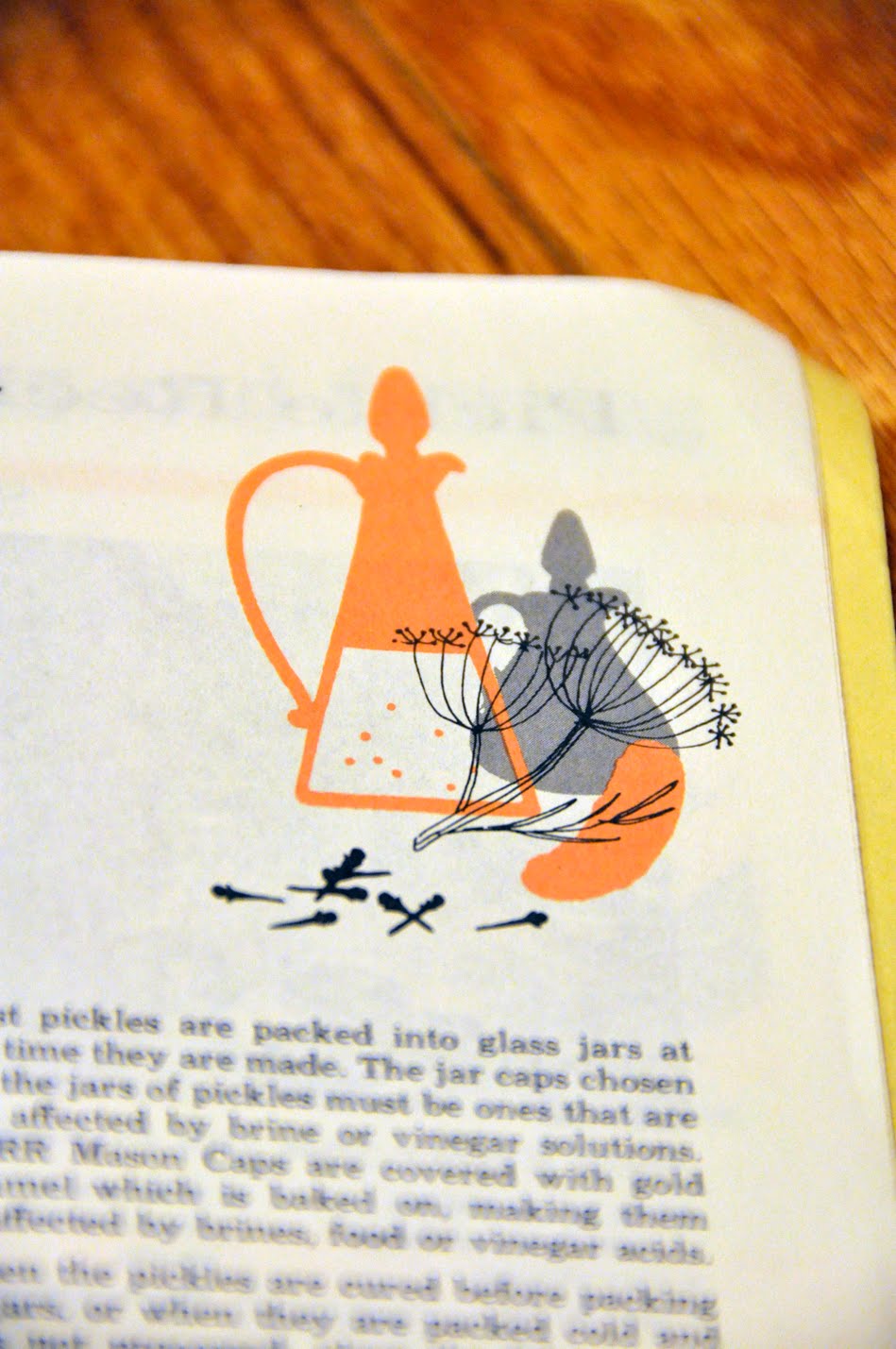
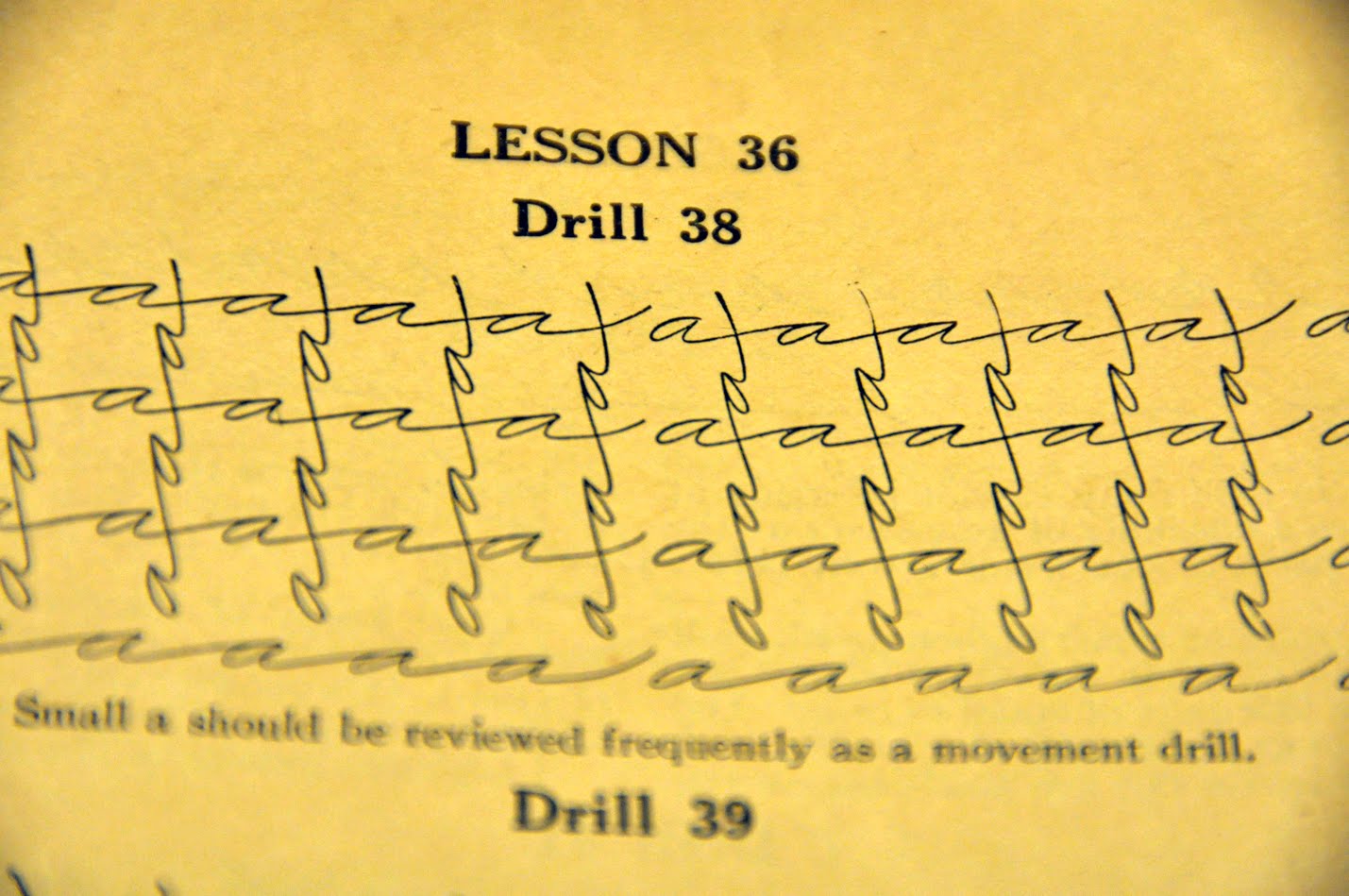
For $1 a piece, I landed two booklets with some beautiful typography examples that I could not pass up. One was a Kerr booklet with recipes for canning from the 1950s and a Palmer Handwriting book from the late 19th century.

They also had some wonderful, vintage photography and illustrations. Here are some samples from the booklets.


So often my students ask where I find my examples or inspiration for design projects. My answer is always to just keep your eyes open all the time. Pull examples from places that are not familiar or where you might not think. Good typography and references for future work is all over the place if you take the time to look carefully and do not pass by things that may seem ordinary at first glance. You may use the style later on for a design that you are stuck on. Magazines and websites have a lot of good references but sometimes the most authentic and textured are ones that have a real world use.

Wednesday, August 17, 2011

Animals in Design

I am currently working on a personal side project with a friend and former student of mine and was in the process of looking for some good animal, illustration inspiration. I looked through past samples I have collected, mainly for teaching, and realized how many amazing examples I have.


I have found that in general, most animal usage in design is still silhouette based. This is the most immediate way to recognize a shape, and especially for logos, you want that immediate, visual impact.


Now, an etching or distressed look is really popular too and I love to see the progression.


Birds in logos and other graphics still seem to be all the rage as well. Everyone loves animals and they have an immediate association with either very cute, emotional or creepy. They are a great visual to use that have so many creative possibilities.

Monday, June 20, 2011

Paper Toy II


Two weeks ago, I attended the second paper craft, toy show at the Pink Hobo gallery in Northeast Minneapolis. Paper Toy II featured a small collection of amazingly intricate and very cool paper craft toys from national and international artists.


The show featured work from such artists and studios as Aesthetic Apparatus, Ocular Invasion, Puny Entertainment and Mark Zubak.


Minneapolis never fails to disappoint in terms of really cool, indie design and art shows. People who do not live here often think it is too small a city to have a rich culture. Having lived here all my life, I love to show examples like this. Granted, it might be for a niche group of people, but small shows with great craft and individuality are what make the art community here so special and unique.


The absolute most hilarious and ones I was more interested in were the interactive pieces. Shown above, the disemboweling monster and redneck hick who pulled down his pants at your command were worth testing again and again.

The simple paper craft toys also had amazing color and were recognizable from the great show Yo Gabba Gabba. Overall, a great show and worth checking out if you are Nordeast anytime soon.

Tuesday, June 7, 2011

Working Designer Mommy: Harder but Not Impossible


When my daughter was born last October, I was already freelancing at that point. Her birth was part of the reason for freelancing instead of being tied to a fulltime job for someone else. I was able to set my own hours and schedule which meant I could maximize my time with her.

When I was in college, non of my professors had children and I always wondered why. Then I became a mother and I saw why some people maybe chose one or the other. But, it was not a choice for me. I wanted to be both an artist/designer and a parent. Some of my friends who are also artists, have asked me how I manage my time and pursue my career when I have a baby.

For one clarification, I do freelance, but I freelance fulltime. I am working pretty much as many hours of the day as possible, usually 40-50 a week. I also have my daughter home with me whenever possible, depending on my schedule. These are times that I have specifically set up to be only our time together. I do not work when I have my daughter, but that also means I have to really be efficient when I am working.

This is my list of the things I have learned about being a working mother, designer, artist, teacher and professional.

1. Have a good support - I could never do any of this without my husband. He also works fulltime as a designer/creative director but we approach everything as a team.

2. Be organized - I have to make a list of what I need to get done every day or every week and I need a really organized filing, invoicing and portfolio system on my laptop.

3. Don't give up creative growth - I try and do a drawing every week, keep updating my portfolio, pursue my own projects and photography and view new artwork and design. This is the most tough right now with the time I have available because it is the easiest to let go of when other things are the priority.

4. Multitask - I cannot emphasize this enough. I have had to learn to be really good at doing 2-3 things at a time and staying organized with it all in my mind.

5. Relax and let go what can be let go - I am overwhelmed somedays but I try and remember that some weeks I will get a lot done and some weeks, it will be a struggle. Some things need to be let go. This is also very hard for me since I can be very anxious when things are not just so.

6. Work hard - Make all of your time worth it and work hard when you can.

7. Work outside of the house when possible
- I find I am much more productive when I can interact with others and can have a new perspective out of the house.

8. Make choices that will positively affect my child and family - Almost every choice I make in terms of work, money, time and effort is related to what is good for them.

9. Do for yourself
- I have also learned that with all the changes, taking a break now and then to draw, take a jog or read can revitalize me for the week.


Life has really changed since we added to our family. But, overall this is only a positive. Priorities and timing have changed, but with planning, organization and a look towards what you want from the future, you can go for it will all of your effort and energy.

Tuesday, May 3, 2011

Blogs/Sites I Follow

I have been asked by students and other designers alike which sites and blogs I follow. I have a few that I am devoted to and check on a regular basis for great articles, design inspiration, news and just general fun photographs and imagery. During a day when I feel stuck on a project, these great sites are sure to get some new ideas flowing!


Design Sponge
I love this blog because it features other creative designs, arts and crafts like interior design, furniture, clothing, accessories and fun ideas for the home and office. It keeps my mind fresh with new ideas that are not centered around only print or web design.


AIGA
The tried and true AIGA (American Institute for Graphic Arts). A staple of most designers, I often find interesting articles and sometimes, job postings. It also keeps me up to date on new designers to follow in the United States and trends that may be happening in other areas.


Twitter
This is the site I use to keep people up to date on my blog posts, new projects and general work-related thoughts for the day. I also get a ton of information on who is looking for a freelancer, the work of other designers I know, friends and events in the area. It often how I find out about a great poster show, new photographer or piece of news in my area.


Typographica
Being a lover of good and new typography, this site is great for new information, books and trends in that area of design.


The Dieline
I absolutely cannot live without this site. I check it almost every day and what I love is that it is completely devoted to one format of design: packaging. From student work, redesigns and professional firms, the work is wonderful, diverse and so inspirational for any ideas you might need for any format of design.


Graphic Exchange
This site is updated almost daily and has beautiful design examples from all over the world in various formats: print, packaging, photography, objects, identity and web. The work is submitted by the designers and has great color, type and texture. I think the web examples are the smallest of the bunch in terms of the variety, but I always get ideas for me designs.

Wednesday, April 20, 2011

Hard Lessons I Have Learned in a Year of Freelancing

It was almost one year ago that I said "good-bye" to my bi-monthly paycheck and a 9-5 working for someone else life. I have never been happier with the choice I made to pursue my own business. It was a scary leap but one I am so grateful for every day. It has given me freedom, the ability to pursue a wider range of work, the chance to work with so many new people and finally, I can take advantage of my type-A personality and control my own working life.

It has also come with some pretty harsh lessons I guess you can never be quite prepared for. Some of them, people warned me about ahead of time, but until you go through it for yourself, it really does not make a dent in your choices. I was lucky enough to have someone there to back me up every step of the way, emotionally and financially. This has made such a huge difference, but so many of the lessons I was going to learn the hard way to make better decisions the next time. This are true for me, but are not necessarily true for all freelancers or people with their own businesses.

1. You cannot hang your hat on any work you have currently

In the beginning, I thought that when someone said they had a project coming in that they wanted me to work on, it was a guarantee. I also thought that work I had now was going to stay for a while. This has almost never turned out to be the case. I am hunting down new work all the time. I would say more than 50% of the time, potential projects never happen or they are on hold until a later time. If I waited for all of those, I would never be working. I have had to learn to be in contact with people all the time to keep stirring the pot of future work.

2. Take out 30% or more of every check you get and put it into an account you never touch to pay for taxes
It is tempting to think that the money you get you can spend right away. Come tax season, you could be in a for a huge shock when you suddenly owe and you have already spent that money. In a regular job, all that is taken out for you so you never notice it is gone. Like all of your accounting and paperwork, taxes are up to you as the freelancer.

3. Workflow has its extreme ups and downs
You have to be prepared to have time when you can barely keep up and you work early in the morning and late at night. This can last for weeks at a time. Being that busy is great sometimes because you are making more money and you are staying busy. There are also extreme times where you literally have no work coming in at all. This can be hard because you have no money coming in, it can be long and boring and also creatively and emotionally straining. This can also last a long time with no real knowledge of when it might end.

4. You might be doing more production than design work This has its ups and downs as well. It is expensive for company's to hire a freelancer and what they might need is someone to do the down and dirty work. It is up to you to decide if you want to do this or not. This also may mean doing your own creative work on the side to keep doing projects you enjoy.

5. You have to make money to freelance. This was also a very hard lesson for me. It comes with a lot of freedom but at the end of the day, you still need to make money. It is not all about doing what you want to do when you want to do it. Pick and choose but do not be too picky if you want to keep afloat.

6. Some clients are more trouble than they are worth. I don't know of another freelancer who would not agree with me on this. It may be that you have to hound them to get paid. It might be that the amount of work versus the compensation is unbalanced. It may be that their approach and personality is hard to deal with. Or it may be that the work is not satisfying. In each case, you have to decide where you are and what are your priorities. Each week, this changes for me based on workload, scope and style of the project, the client and money flow. You have to do work you like and keep incoming work as well.

7. You have to say "NO" to work sometimes.
This is very hard as a freelancer because you never know where the work is going to come from. This means it is very tempting to say "YES" to everything just in case you have a dry spell. This works sometimes, but it also can mean you have way more than you can handle and you will get burned out. Listen to your instincts. If it feels wrong, it might not be for you.

8. Take a break sometimes.When I started, I had the feeling that I really had to prove myself. I worked all the time and never took a break during the day. Then someone told me that if you worked a regular job, you would talk to co-workers and walk around once in a while. Now, I take advantage when I have some downtime to work out of the house, work a different schedule or go to the gym during lunch.

9. Find other occasions to socialize and network. This has been the hardest for me. I have a quiet personality and so do not notice much being alone during the day. Eventually though, it can get to you. Try and work outside of the house with other people, see friends on the weekends and network to make some new connections. Network as much as you want to to seek out that next piece of work, but also, just to talk to other people. I also like to work on-site sometimes just to have connections with people during the work day.

Overall, freelancing has been great to me so far. Harsh lessons sometimes, but never regrets.

Wednesday, April 13, 2011

What Have I Learned From Teaching?

When I originally decided to take on design teaching as part of my freelance life, there were two main reasons. One obvious one was to have some income during lean times in freelancing. The other was to try and impart some important things I hold near and dear that I learned when I attended art school and that I acquired in my professional life. How could I express to people and have them be as passionate as I am about good typography, the fundamentals of design and having a strong concepts behind every design?

I went into teaching with, I think, very uptight attitude about the whole thing. I went through hell in art school with the workload, tough critiques and other challenges. I think the whole experience made me a stronger designer, and so I wanted to teach the way I was taught. Tight structure, controlled syllabus and constructive critiques was the way I started. OK, sounds reasonable, right? Well, easier said than done. I quickly realized that teaching outside of my immediate experience was going to need constant tweaking and adjusting based on the students and their skills.

My fourth teaching experience was at MCAD with students in a partnership with a local high-school. This was the experience that immediately had me learning so much more than I think I have taught them.

1. Sometimes, approaching students gently rather than harshly yields better results.
As hard as this is for me to admit, because I am a total no-nonsense type of person, I cannot expect all students to be like me in their approach and focus.
2. Encourage as much as possible
Especially with my high school students, I want them to keep coming to class and finish school, so small victories may lead to something bigger.
3. Keep critiques as interactive as possible, but do not push it further than it can go.
Some people are not going to be good at this and I cannot only push the class so far to be constructive in terms of comments. It seems that most people think critiques are only for positive comments and have a hard time making suggestions. This is a skill that gets better with time as people get to know each other.
4. Adjust assignments based on comments.
I reuse assignments that work well and that I think have great lessons in them, but will change in the next class after seeing the results. Sometimes, students don't get as much out of them as I did.
5. Hands-on exercises work well sometimes, but have to be adjusted sometimes as the attention span and technology changes.
This has been the hardest lesson for me to learn. I learned almost all design by hand which I still think is amazingly valuable to understand the fundamentals, especially typography. It teaches you to train your eyes and I still think the computer is a tool, not the design. That comes from your ideas. But, I have had to adjust to get an assignment at all because younger students will push back to use the computer. Sometimes, it is the lesser of two evils.

All in all, depending on the age group and the class, teaching adjusts every week. I am surprised and challenged all the time. Good lessons for me and hopefully my students.